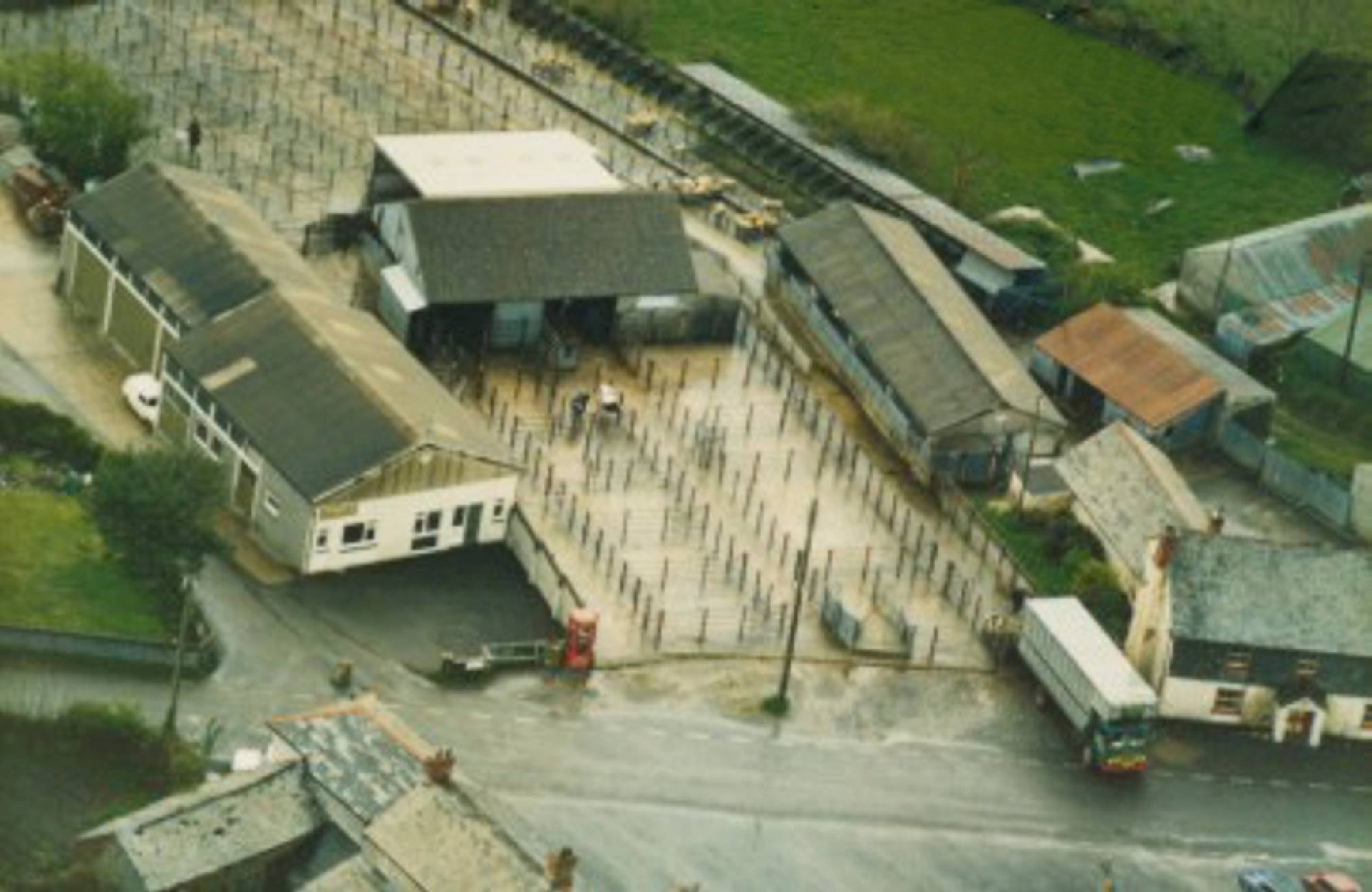
The village has had a market, according to records, from around 1221. The permission to hold a market in the village was granted to a Richard de Wyke.
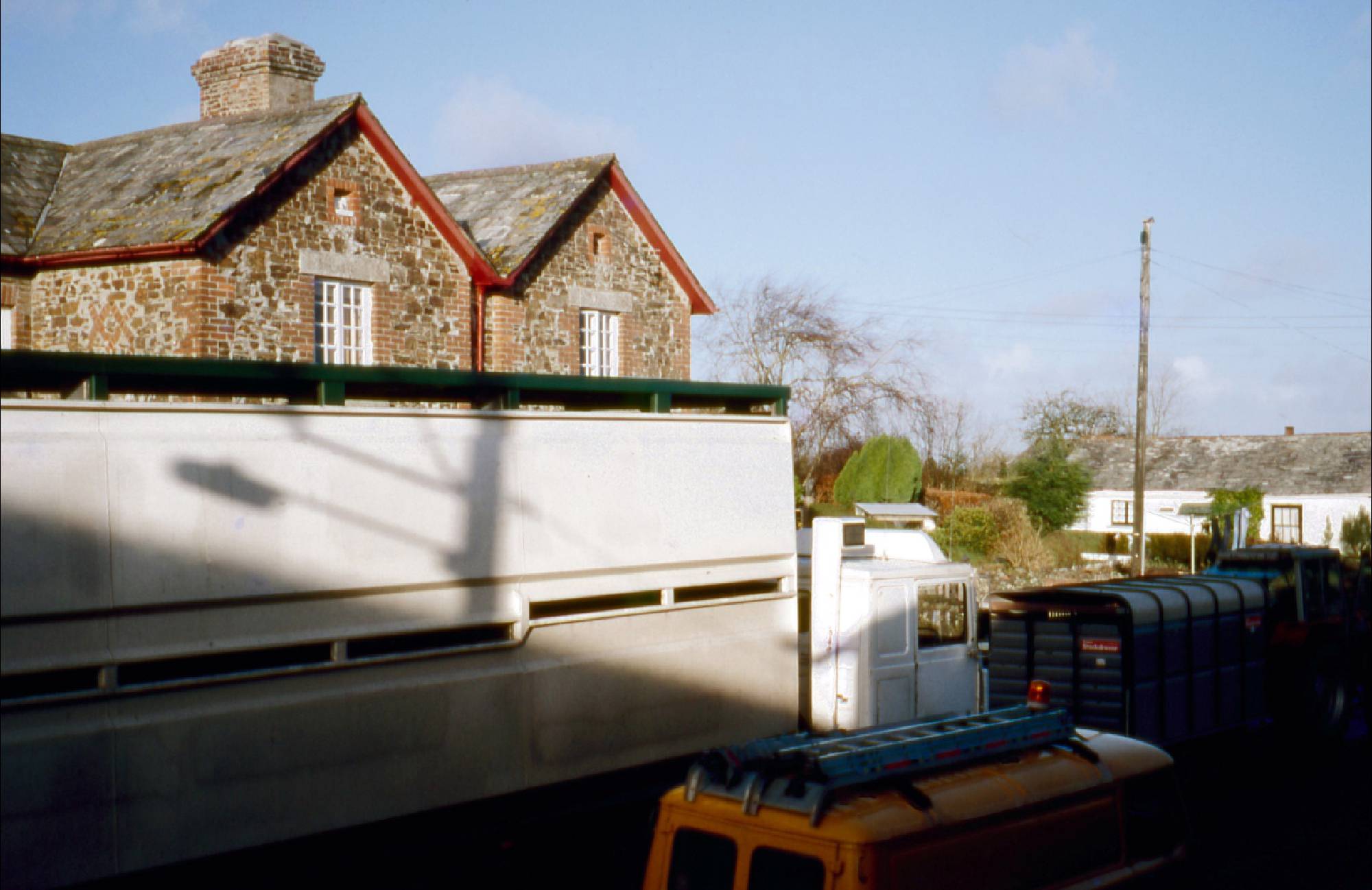
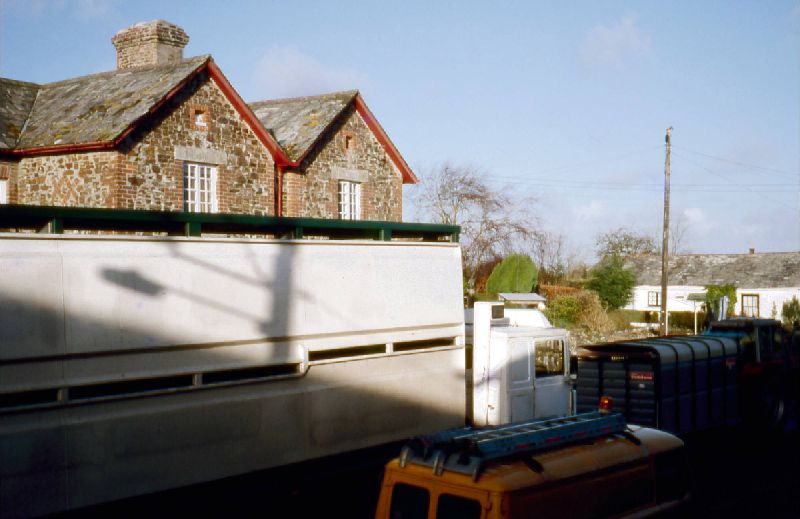
For most of us the market conjures up images of The Square and nearby roads bustling with cattle lorries, tractors and trailers, landrovers and cars with trailers, all with signs of having recently conveyed some kind of livestock.
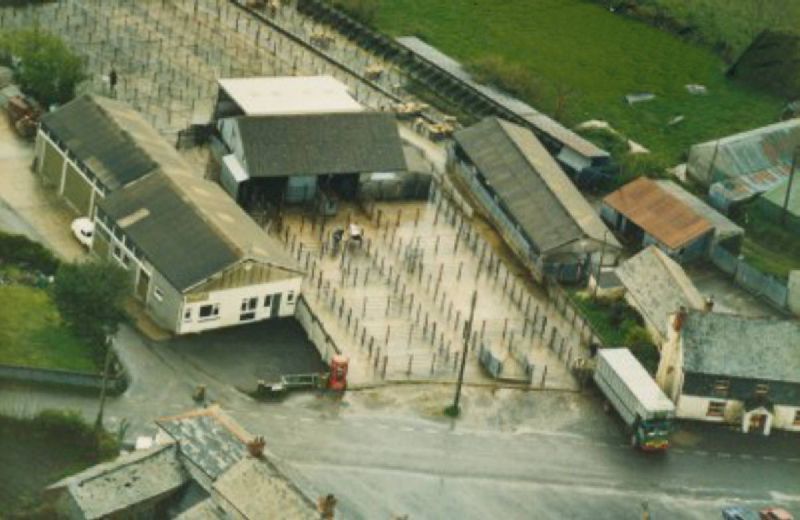
It is understood that lorries were getting bigger and the amount of traffic in general was the downfall for a small village with narrow access roads. The market eventually closed and moved to the more-accessible market at Hallworthy.
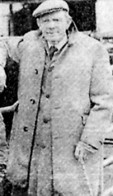
The hammer came down on 69 years of history at Week St. Mary on Saturday when the weekly fatstock market closed down – a victim of its own success.
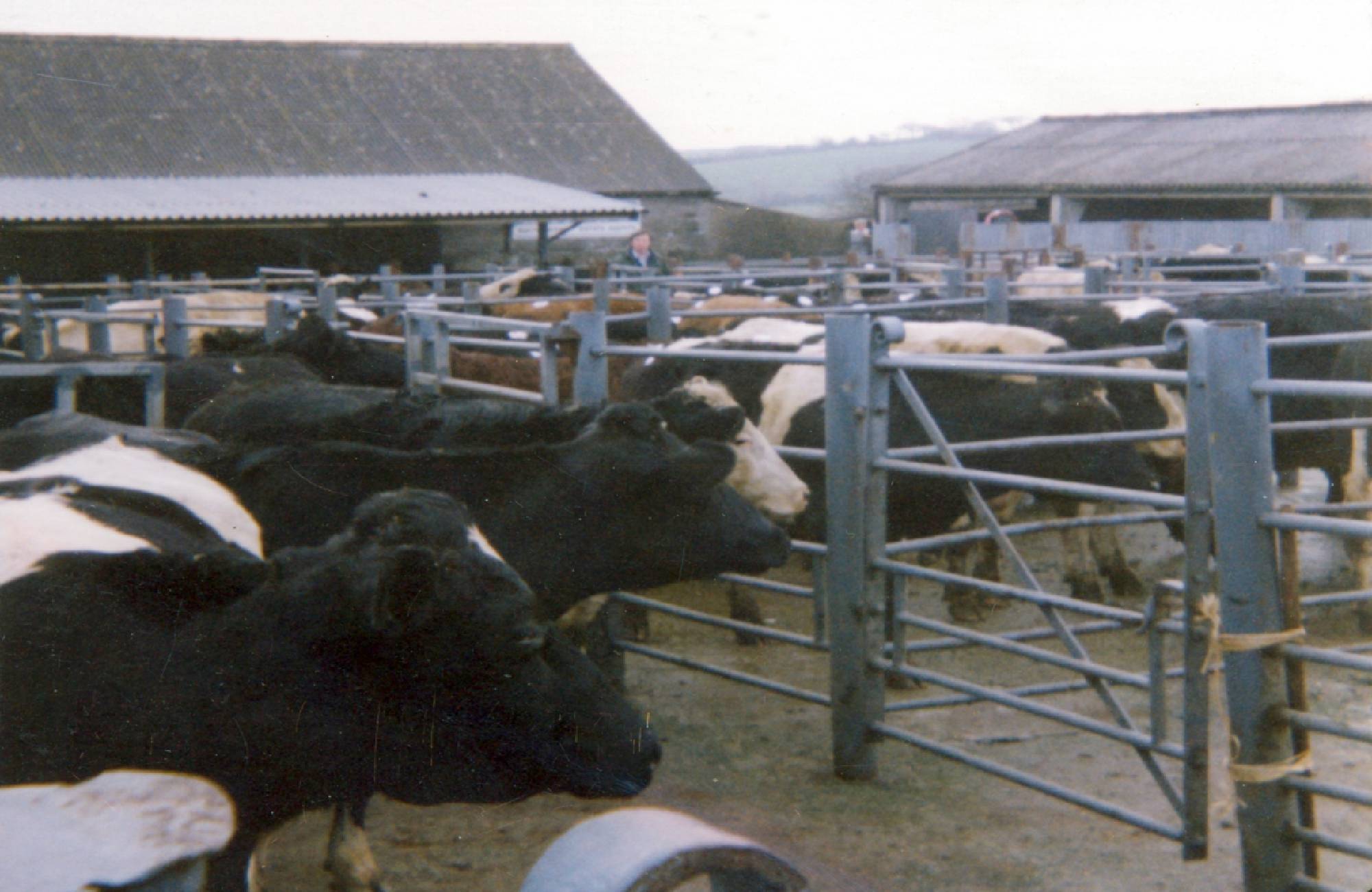
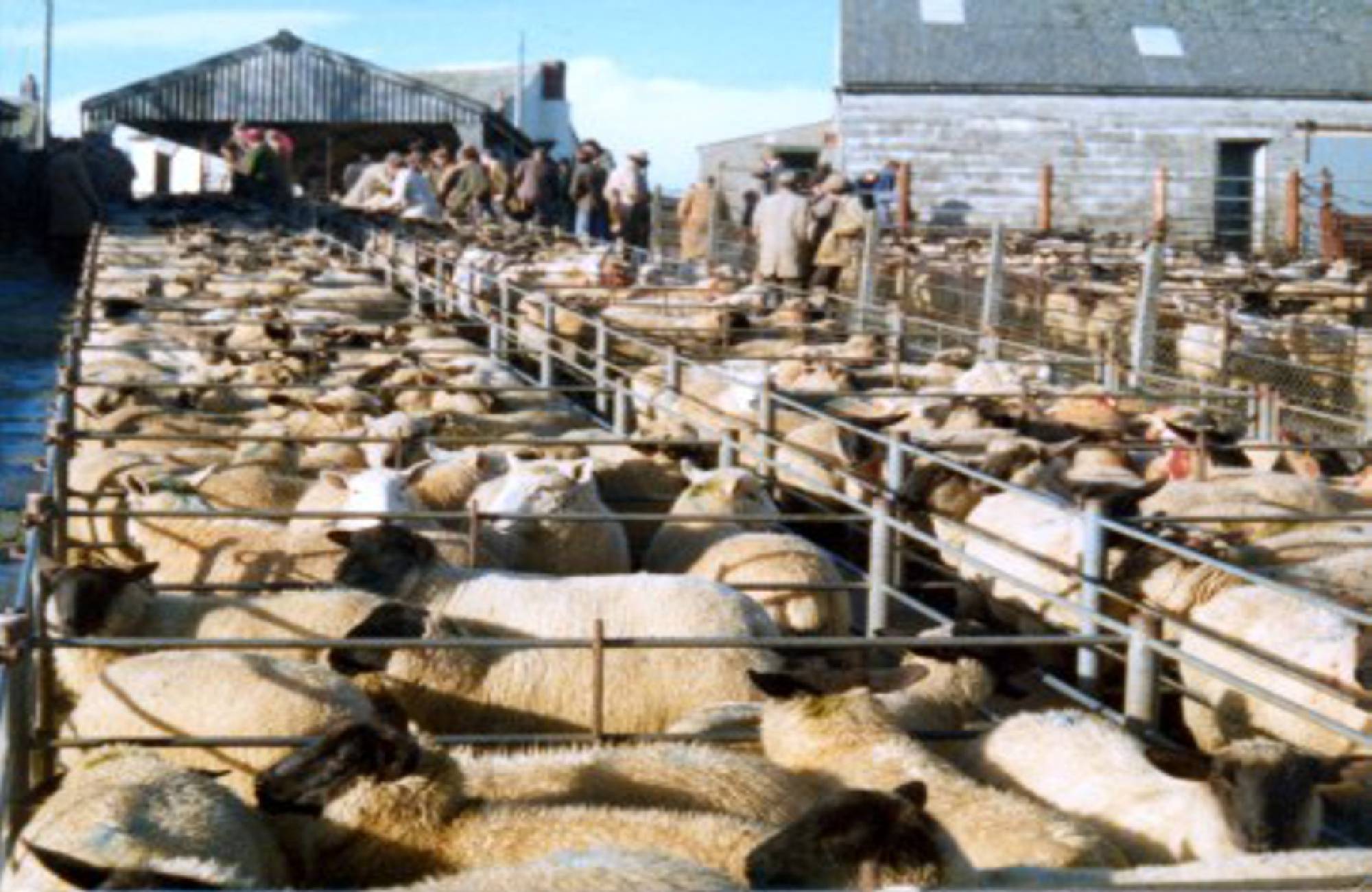
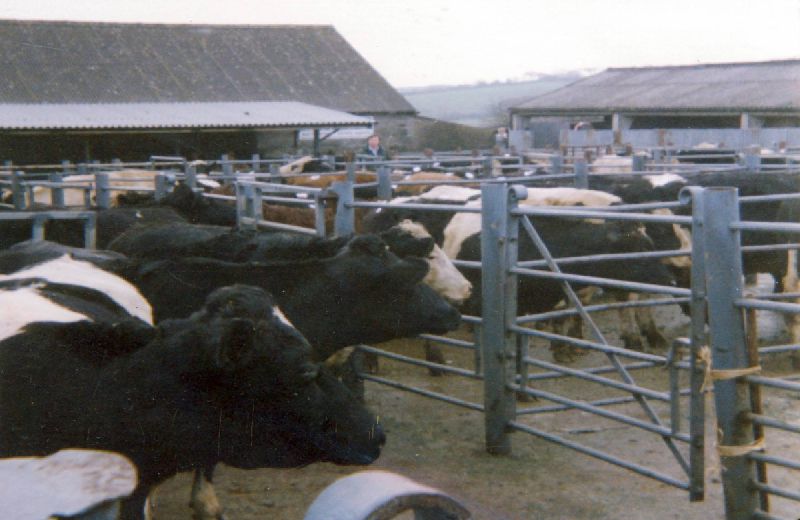
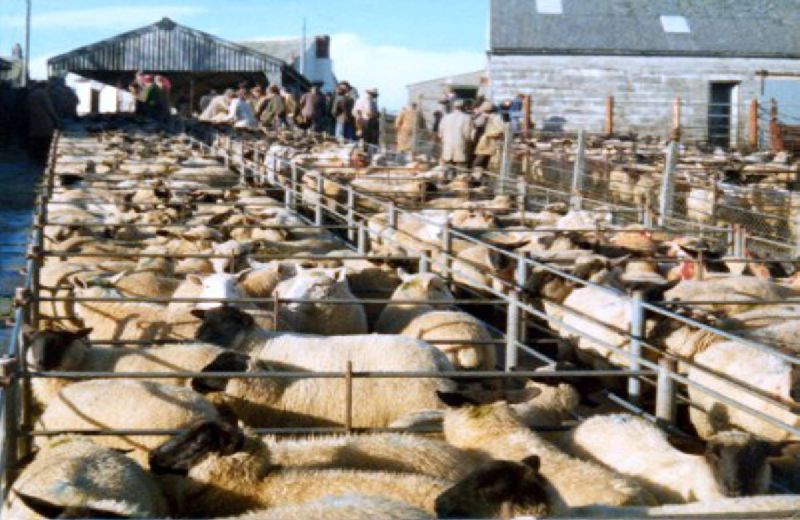
The market, which handles on average 120 cattle and 1200 sheep a week, has outgrown its site at Week St. Mary. Auctioneers Kittows are transferring it to the larger Hallworthy premises.
Celebration mingled with sadness as farmers gathered for the final sale. Jack Ridgman. A former fatstock officer, recalled seeing the first Week St. Mary market in 1918.
It started when two local farmers, Chris Venning and William Paynter, sold six cattle and sixteen sheep in the village square.
Said Mr. Ridgman: “I was seven years old. At those early markets the cattle were all Devons with loop horns. I saw the market start and now I will see it finish, but it’s a sad day for Week St. Mary.”
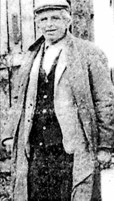
Picture here is Mr. Gerald Horrell who had been responsible for the cleaning of the cattle market for over thirty years, working throughout the afternoon following the removal of the last sheep, cattle or pigs.
Mr. Cliff Orchard, the market Chairman for twenty-four years, has bought more stock there than anyone. He remembered the market closing for a time in 1947 because of a local outbreak of foot and mouth disease. The harsh winter of 1963 also prevented the market from operating.
But he also recalled happier moments: “About two years ago some sheep were being unloaded and they ran off across the village square, they got into a holiday chalets site where there was a cover over an outdoor swimming pool – one of the sheep jumped onto the cover, went straight through it and ended up in the pool!”
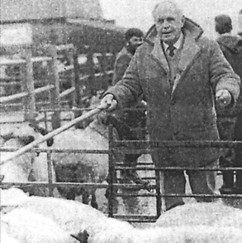
Guiding hand - Kittows senior partner Mr. John Dennis. (pictured)
Mr. Orchard said the market had been good for Week St. Mary, but people had to accept that change was inevitable. “Prosperity has brought us problems, but at least we are going out on a high note,” he added.
Week St. Mary sub-postmaster, Mr. Jeff Roberts, said the market closure was bad news, but he understood why it had to go. “Some villagers are pleased because it will be quieter here, but I think the majority are sad to see it close,” he said.
The closure does not mean the end of work for Mr. Gerald Horrell, who has cleaned the market for more than thirty years. He will be dismantling the pens, many of which will go to Hallworthy. Kittows became involved with the market in the 1920s when they acquired land adjacent to the square.
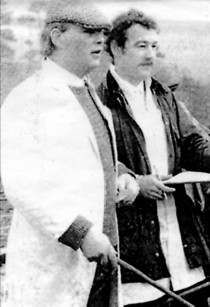
Senior partner, Mr. John Dennis, who has been coming to the market for thirty-eight years, was there on Saturday as his sons, Peter and Richard, carried out the last auction with Mr. Simon Alford. On offer were 88 cattle, 545 sheep – and a solitary pig.
When the last graded animal was sold, Mr. John Dennis took the microphone and thanked farmers, the Ministry of Agriculture officials, hauliers and market staff for their help over the years.
He told “The Post”: “For sentimental reasons I am saddened to see the market close, but it is progress – we must have larger premises – Week St. Mary market is a victim of its own success.”
Mr. Dennis said that at Hallworthy the same strict market procedures would be carried out – cattle for grading would have to be on the premises by 10.30 am or they would be ineligible.
The market will be missed at Week St. Mary’s Green Inn, where landlady Mrs. Diane Hobbs cooked up to 30 meals each Saturday for farmers. Mrs. Hobbs penned a 20-line poem to mark the closure, which ended on an optimistic note: “We’ve had plenty of fun, now bidding is done, staff at the Green Inn can lay in till one”.
Mrs. Hobbs said “We’re very sad to see the market go, not just because of the business it brought, but because it’s part of the village”.
The Green Inn had a special market day licence extending its Saturday lunch-time session to 4 pm, but the pub will now close at the standard time of 2.30 pm.
Hallworthy, which already operates a market on Fridays, will hold its first Saturday market this week – the only Saturday fatstock market between there and Taunton.
All of the the photographs in this article are credited to and acknowledgement given to Primrose Studios which we believe has ceased to trade but we acknowledge their copyright accordingly. The above article reproduced by kind permission of the Cornish & Devon Post

50º 45'03.84N 4º 30'01.39W OS: SX 237977 Elevation: 142m
© All of the content of the Week St. Mary website is the copyright of David Martin & Linda Cobbledick except where stated